
The Gift of Black and White

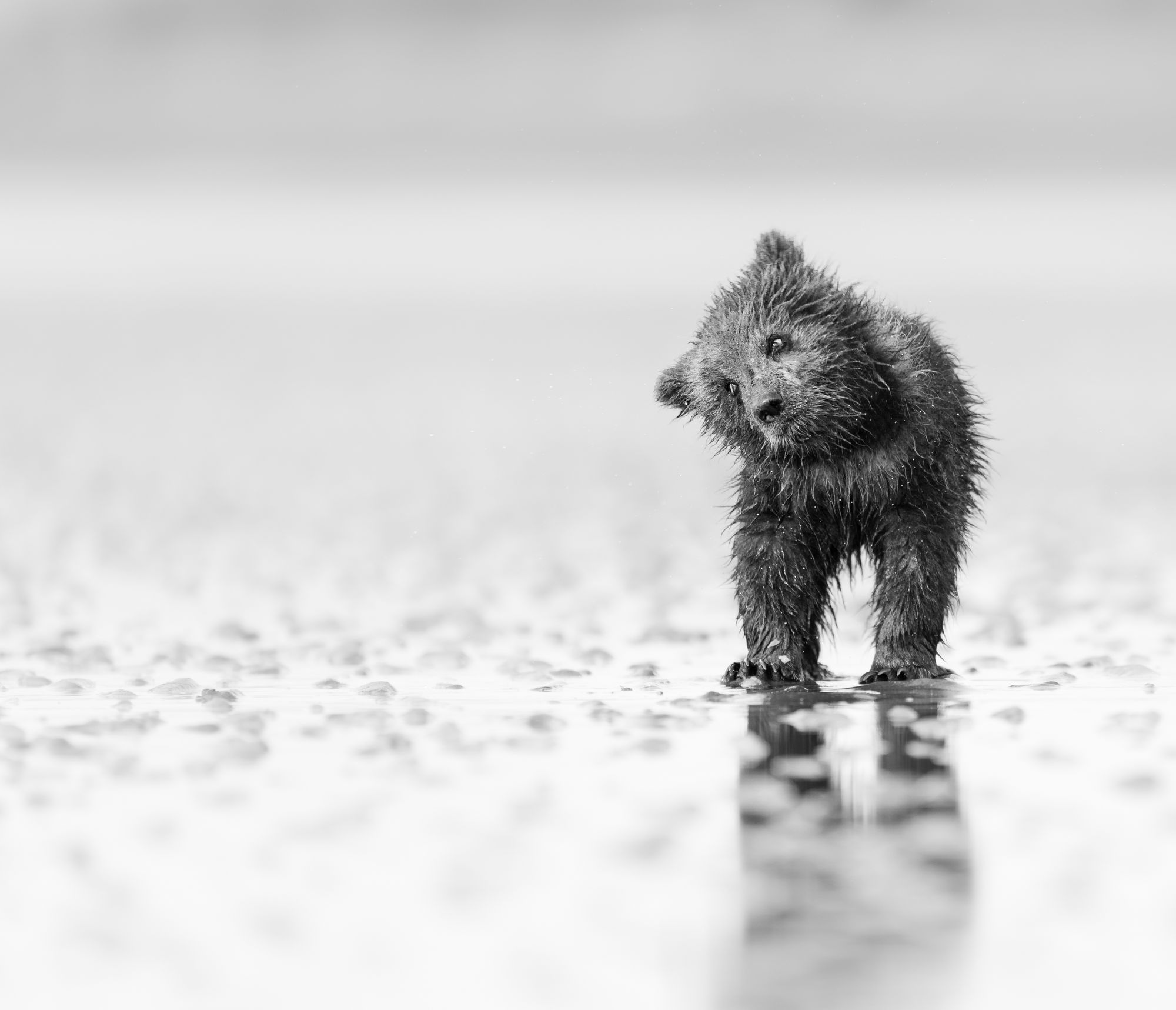
So here is an embarrassing confession: I used to scroll right past some of the greatest wildlife photographers in history. Not because their work was not incredible—but because they shot in black and white.
I know. I KNOW.
In my defense, I have only been doing photography for a few years, and I was convinced that showing God's creation meant showing it in full, glorious color. Black and white felt like watching a movie with the sound off. Like you were missing half the experience.
Plus, I have spent my whole life hearing that "black and white thinking" was the problem with everything. Rules were too restrictive. Boundaries were for people who could not handle complexity.
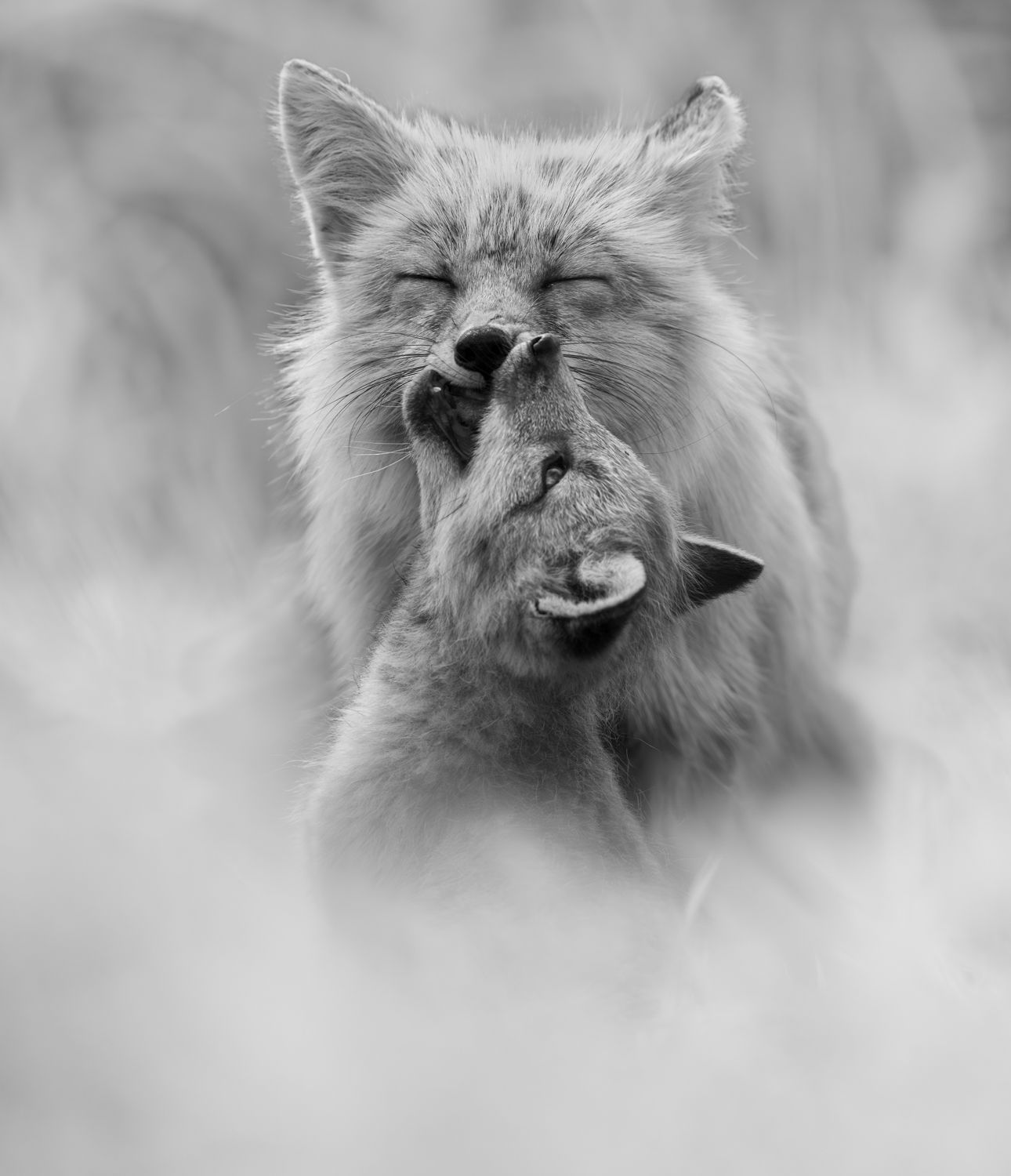
So when I saw a contest that required black and white only, I almost didn't enter. Almost talked myself out of it entirely. But I had already edited this image of a fox kit biting its mother's nose—you can see her squinting in pain—so I figured, why not? What is the worst that could happen? I would learn something from the feedback, maybe make it to the finals, probably not win anything.
I hit submit and immediately forgot about it.
A week later I found another black and white contest. Same thought process: I have already done the work, might as well get some practice with this whole monochrome thing I clearly do not understand. Both contests were international. Both took months to announce results. And honestly? I did not think about them again until the emails arrived two days apart.
First email: Third place. Five other photos I entered received honorable mentions.
I literally had to read the email three times. Then I sat there thinking: "Wait, these are the same images I almost didn't submit because I thought color was essential? The ones I edited while actively believing black and white was... less than what I thought they should be?"
Second email, 48 hours later: "Congratulations on winning one of the top honors at the Exposure One Awards!" I had won something—they wanted interview answers for their digital magazine—but they did not say what I won. Just "top honors." Results would be posted that night, and the suspense was killing me. When the announcement finally went live, I think I stopped breathing: First place in category. AND. First place overall.
My first serious attempt at black and white photography. A medium I had been dismissing for years. And I had just won an international competition against photographers who actually knew what they were doing.
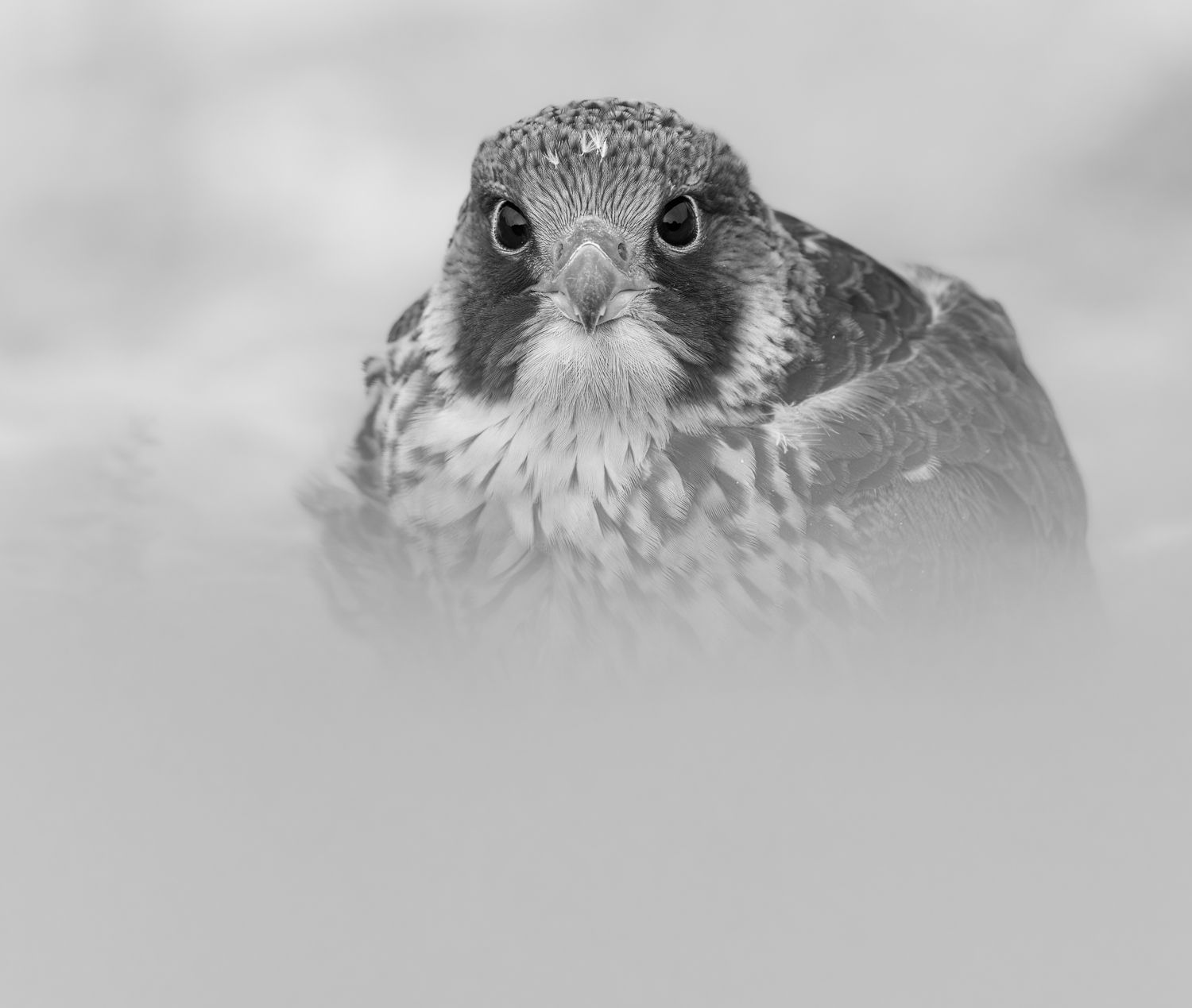
God apparently had a sense of humor about my resistance. I had been despising black and white as "less than perfect" for years—dismissing it as a small thing, an inferior medium—and it turned out to be the very thing that taught me to see clearly.
"Do not despise these small beginnings" (Zechariah 4:10).
But here is where it gets interesting—and uncomfortable. Because once the shock wore off, I had to ask myself: Why did this image win? And the answer stopped me cold: Because in black and white, people saw themselves.
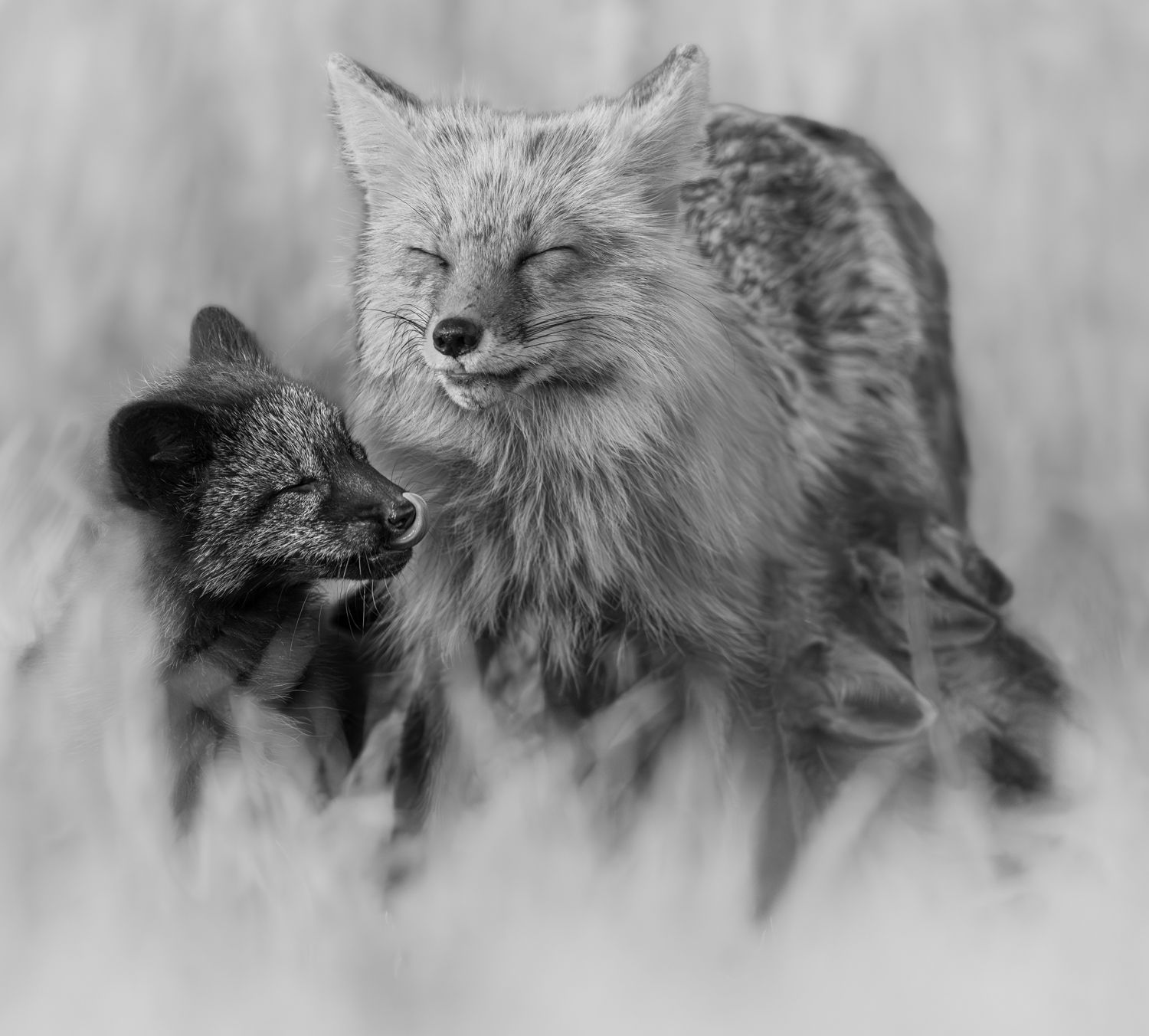
Every parent who has ever had a baby grab their nose, pull their hair, bite while nursing—they saw this moment and recognized it instantly. The pain. The patience. The love that does not pull away even when it hurts. What you could not see in the winning photo is that the mama fox was nursing other kits at the same time. None of them suffered. Only her. That is love.
In color, we might have thought "pretty fox" and scrolled on. But black and white makes us stop. Make us actually see the story: a mother enduring pain because love costs something. That is not exotic wildlife. That is Tuesday morning at 3 AM with a screaming infant. The "restriction" of black and white did not limit the image. It removed the exotic and revealed the universal.
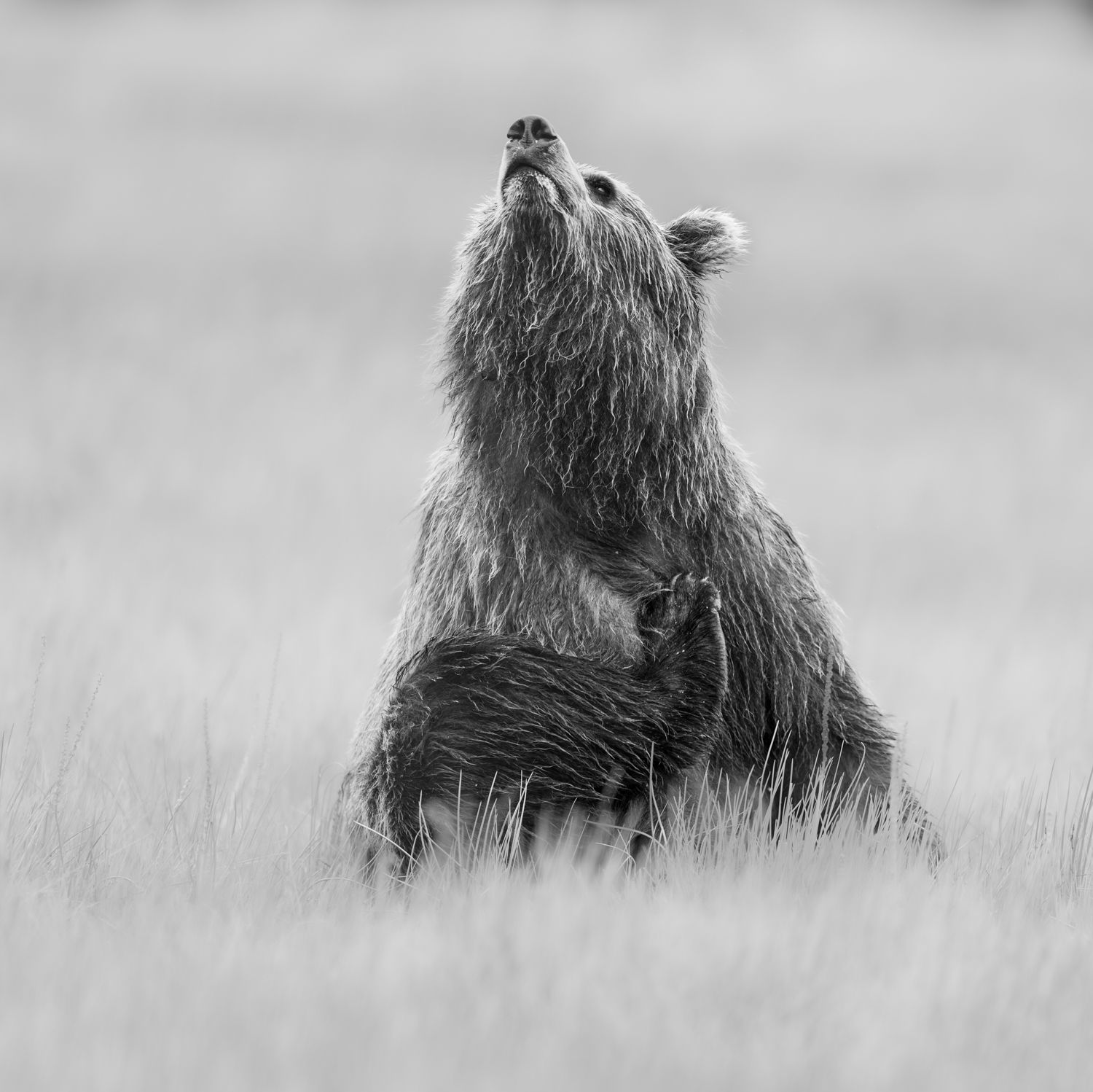
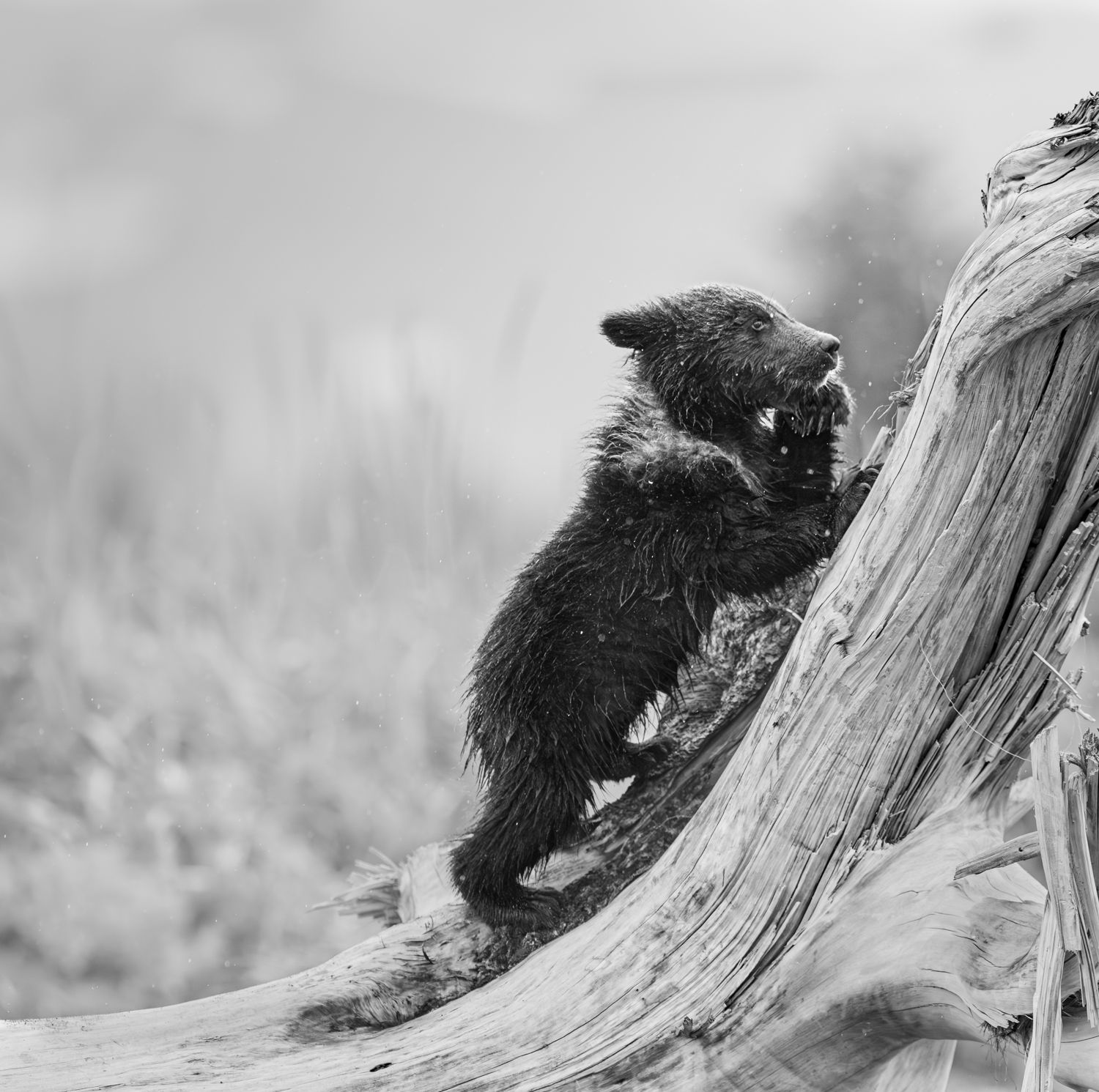
Or this one. We have all had that itch. You know the one—right in that spot you cannot quite reach. And when you finally get to it? Pure relief. That satisfying "ahhhhh, yes, THAT'S the spot."
In color, you would see "bear scratching." In black and white, you feel it. And I am starting to realize something uncomfortable: We scroll through life in color too. Fast, surface level, pretty pictures for the feed. We miss the real stories happening right in front of us. The love that is costing someone something. The small reliefs that make hard days bearable [pun intended]. The ordinary moments that connect us all. We treat everything like content to consume instead of truth to encounter.

Look at this. You can almost feel it, can't you? That moment when someone is talking to you and their breath is... well, less than fresh. And you politely turn your head while trying not to be rude about it. We have all been there. On both sides of that conversation, if we are honest.
Black and white stripped away the "wildlife photography" and left me looking at my own awkward life. My own messy relationships. My own moments of trying to be polite while quietly suffering.
And here is what's making me squirm: What if God's "black and white" truth works the same way? What if His clear boundaries are not meant to be exotic rules for super-spiritual people, but everyday frameworks for everyday life? What if when He says "love one another" or "bear with one another" or "forgive as you have been forgiven," He is not being restrictive—He is being relatable? He is saying: "I see your Tuesday. I see your awkwardness. I see the moments you are enduring because love costs something. And I am not asking you to be exotic. I am asking you to be faithful in the ordinary."
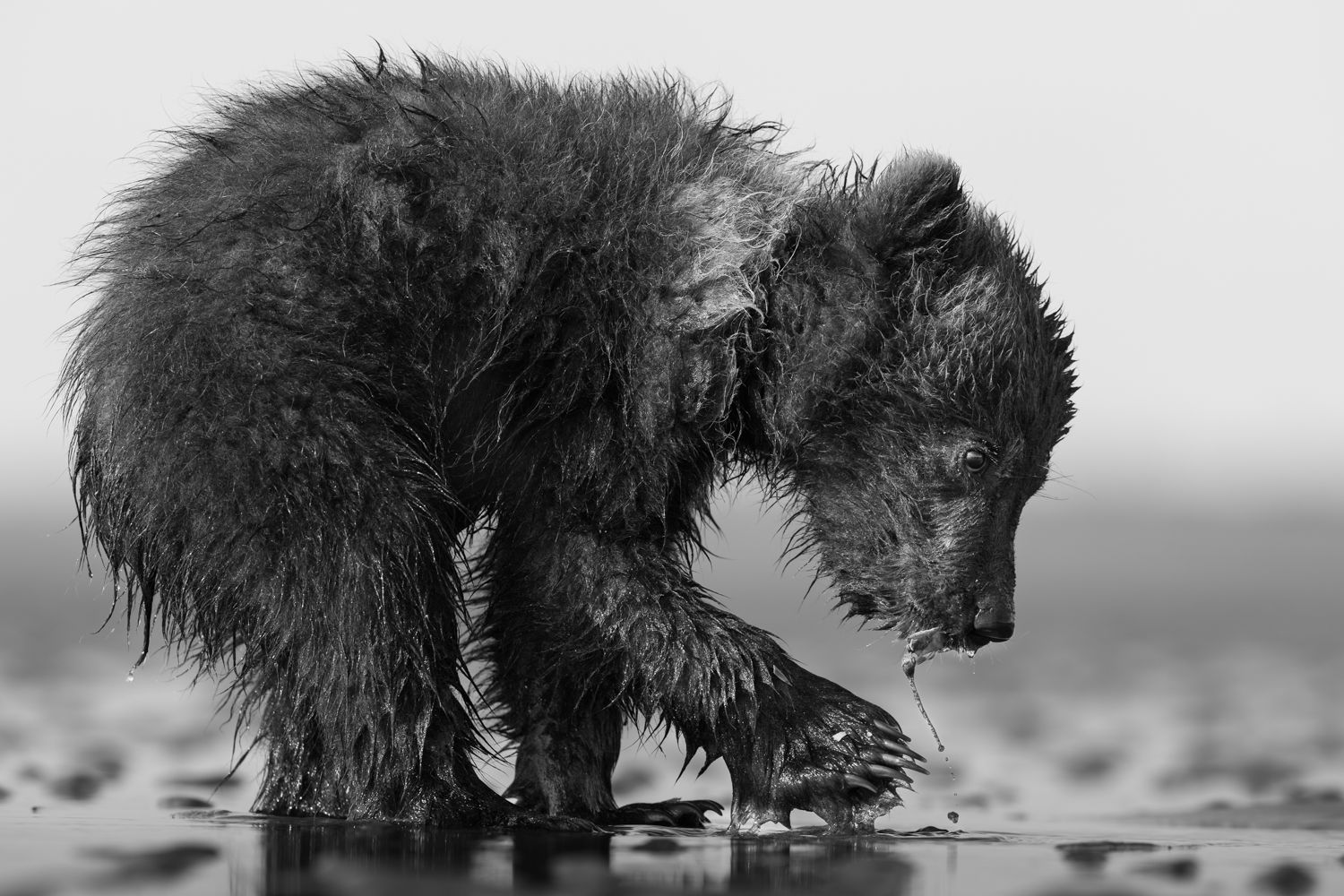
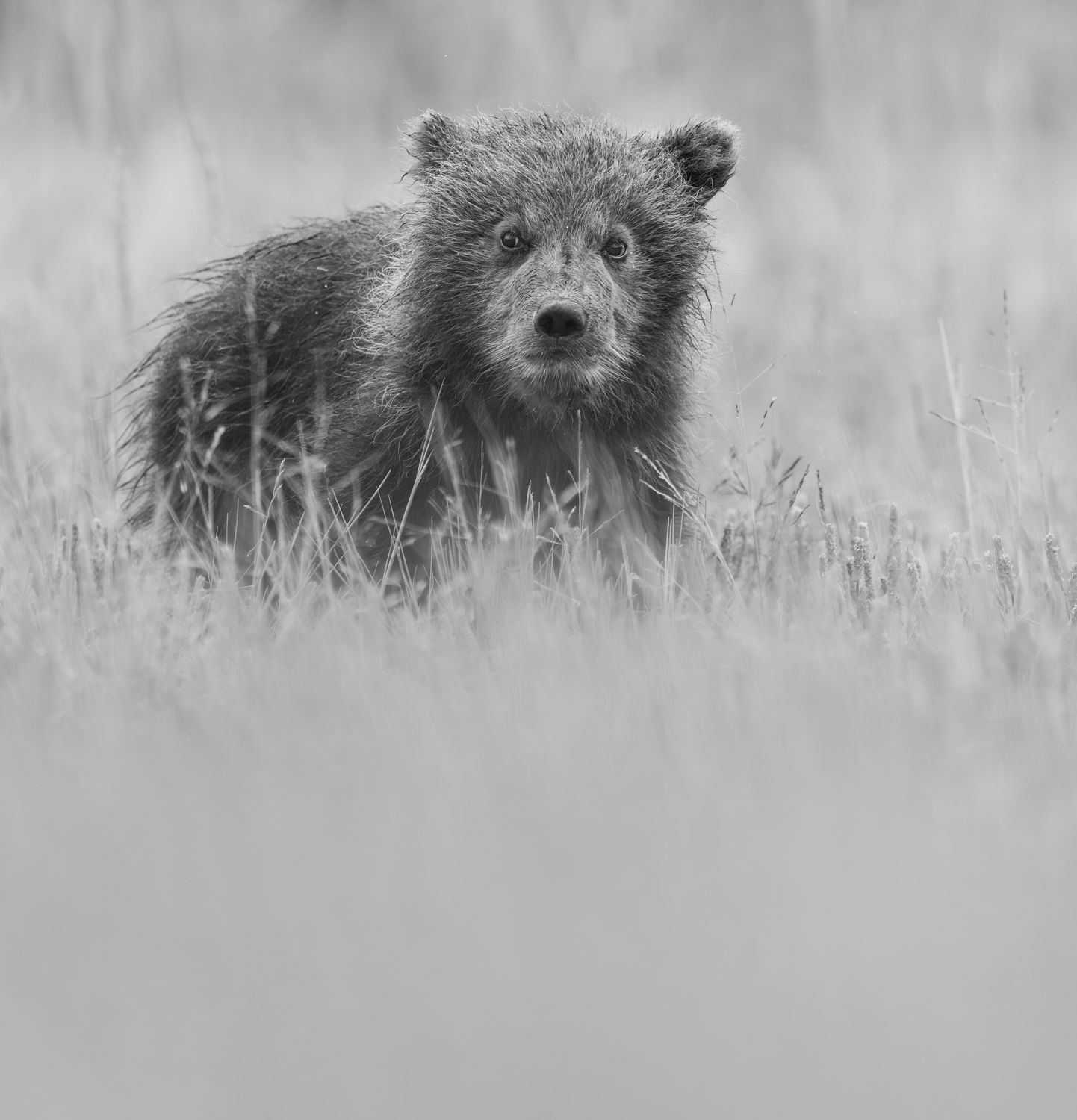
We have all had days where we look like this. Bedraggled. Scruffy. Definitely not Instagram-ready.
In color, we would try to hide this cub. Edit it. Filter it. Make it presentable. But in black and white, the scruffiness becomes... honest. Real. A moment of "yeah, life is wet and messy and I am doing my best here."
And I am realizing: We spend so much energy trying to live in color—filtered, pretty, highlight reel—that we miss the beauty in the black and white truth of ordinary struggle. We hide the hard parts. The messy parts. The days when we are just trying to keep our heads above water.
But what if God is not asking for the filtered version? What if He is inviting us to show up scruffy, to stop performing, to let the "restriction" of truth actually free us from the exhausting work of pretending?
"Come to me, all you who are weary and burdened, and I will give you rest" (Matthew 11:28).
Come scruffy. Come messy. Come as you actually are, not as you wish you were.
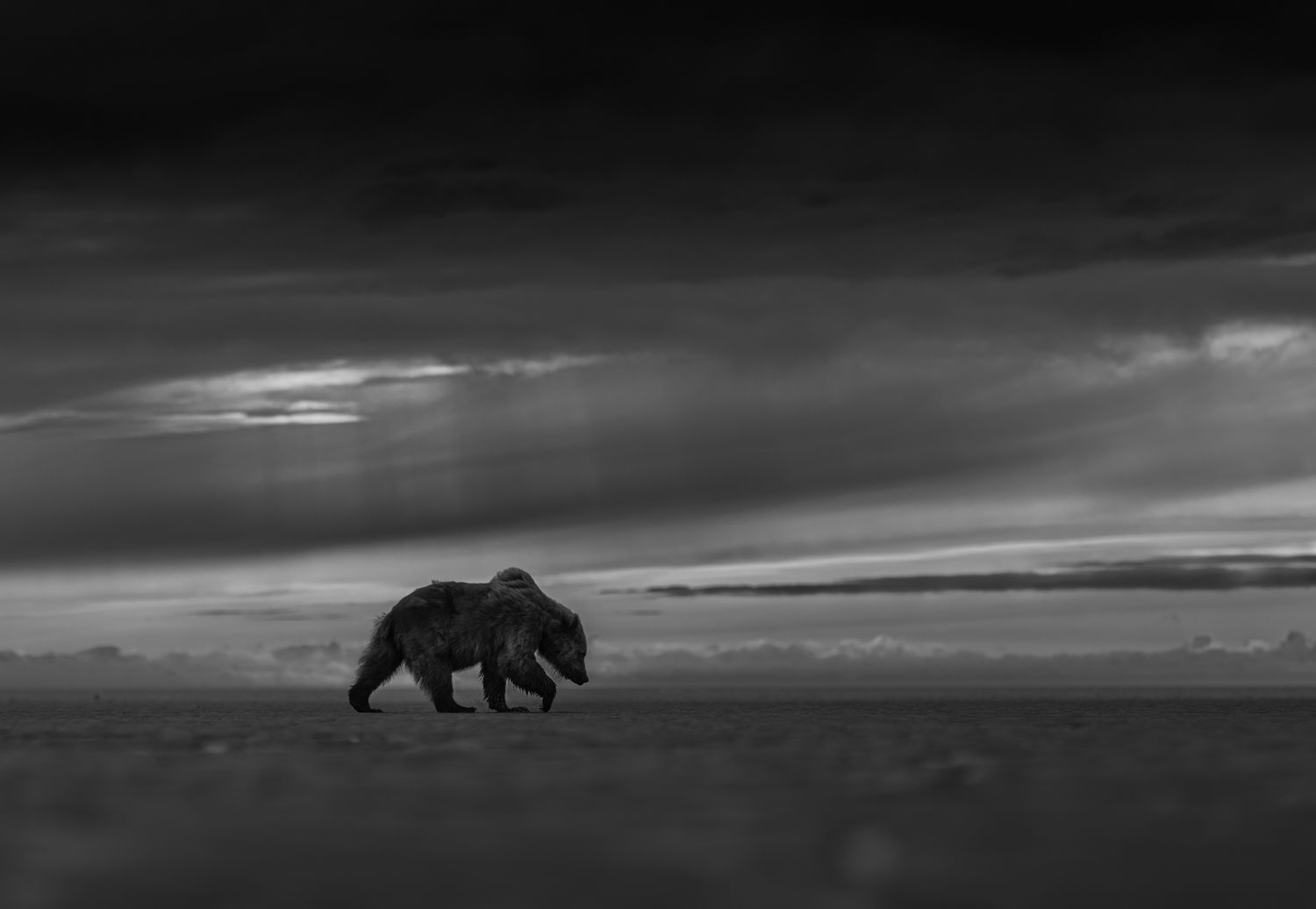
But here is where black and white gets really honest. Because it does not just show the relatable moments and the scruffy days. It shows this too. The storm. The weight of it. The feeling of facing something so much bigger than you, so overwhelming, so dark.
In color, we might try to make this beautiful. Golden hour lighting, dramatic clouds, nature's majesty. But in black and white, there is no hiding from what this actually is: hard. Heavy. The kind of moment that makes you wonder if you can keep going.
And I need you to know: if you are in that moment right now, black and white sees you too. The struggle is not exotic. It is not content for someone else's inspiration. It is your real life, and it is heavy, and it matters.
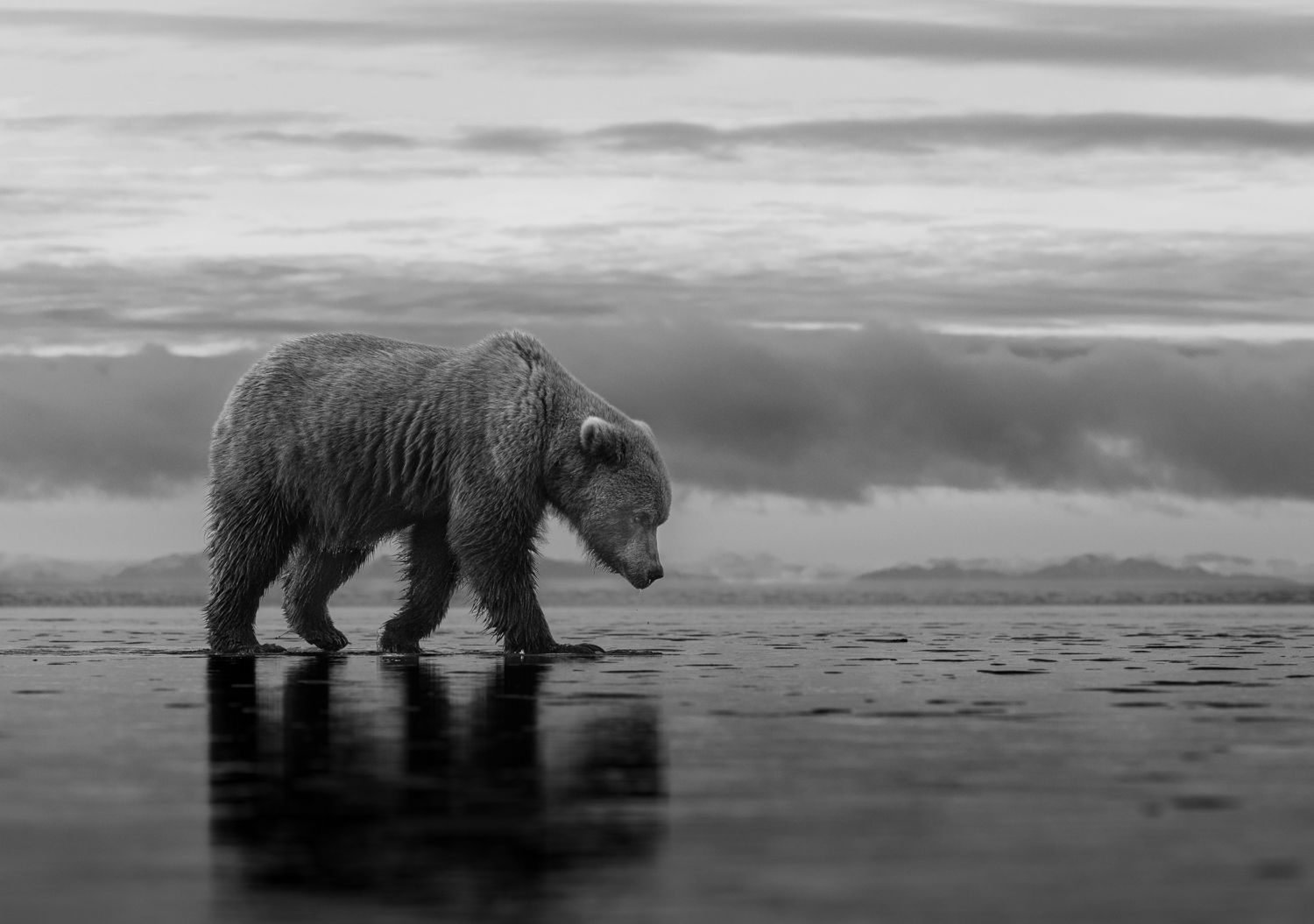
Or this. When it feels like you are alone. When the only company you have is your own shadow looking back at you. When the lie whispers: "See? No one is here. You are abandoned. You are on your own."
Black and white does not soften this moment. It shows it clearly. The isolation. The in-between space. The waiting. But here is what I am learning about black and white truth: It shows the hard parts clearly—but it also shows God's promises clearly.
"I will never leave you nor forsake you" (Hebrews 13:5).
That is not vague. It is not "maybe" or "when you deserve it" or "if you try hard enough." It is black and white. It is the clearest promise when you feel most alone. The shadow is not proof you are abandoned. It is proof there is still light—even if you cannot see the source right now.
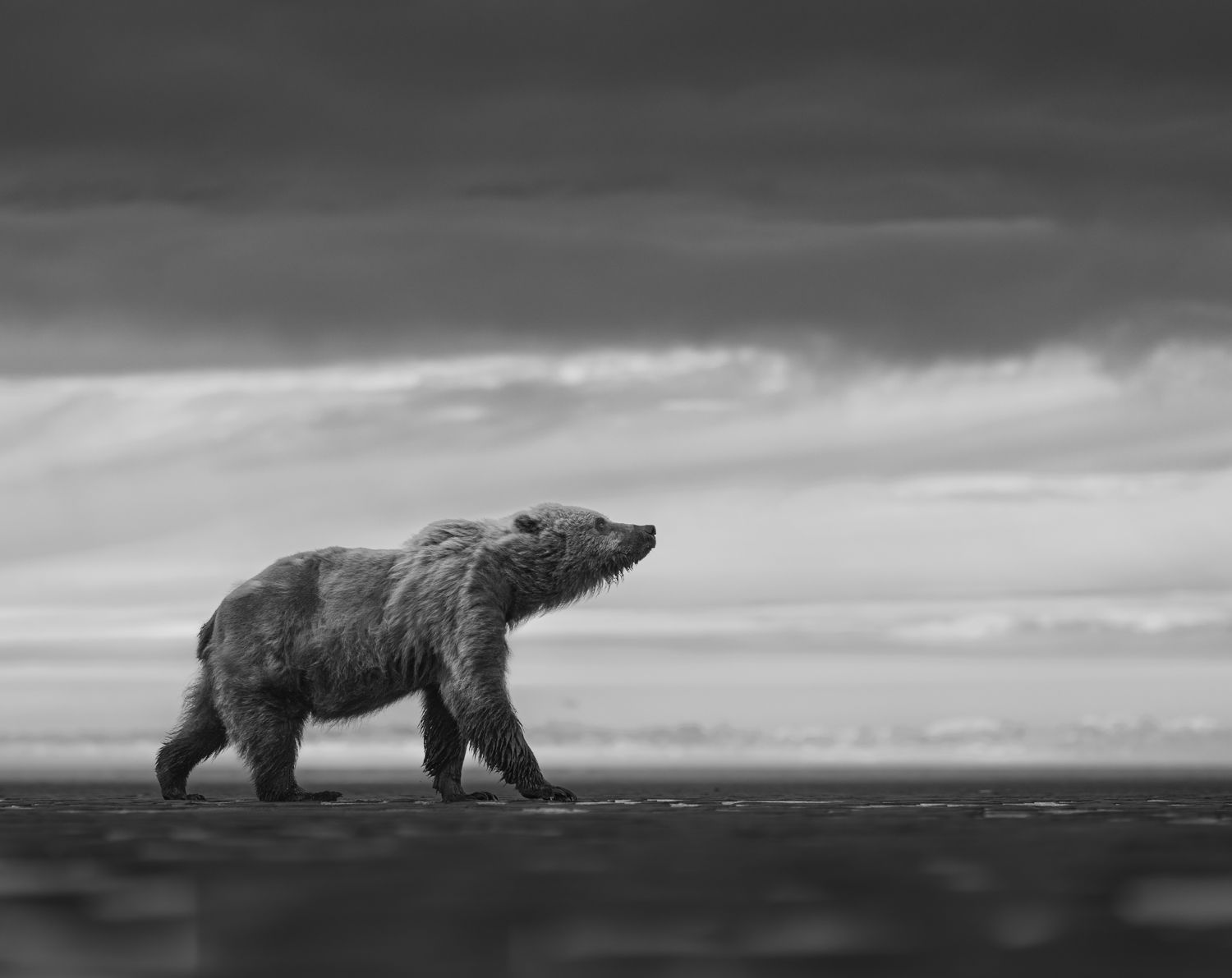
And then there is this moment. Same storm. Same struggle. Same weight. But something is different. The bear is looking up.
Not because the storm stopped. Not because the hard suddenly became easy. But because in the middle of the adversity, there is something about lifting your head. About choosing hope even when hope feels hard.
You can almost feel the wind in this image. The resistance. The cost of standing. But you can also feel something else: determination. Perseverance. The refusal to let the storm have the final word.
And I am sitting here thinking about how black and white shows BOTH—the struggle AND the hope. The weight AND the looking up. It does not hide either one or pretend one does not exist. That is real life. That is the black and white truth we try to avoid by living in filtered color: Hard moments exist. AND hope exists. Struggle is real. AND God's presence is real. Both. At the same time.
"We are hard pressed on every side, but not crushed; perplexed, but not in despair; persecuted, but not abandoned; struck down, but not destroyed" (2 Corinthians 4:8-9).
The contrast is not optional. It is the whole truth.
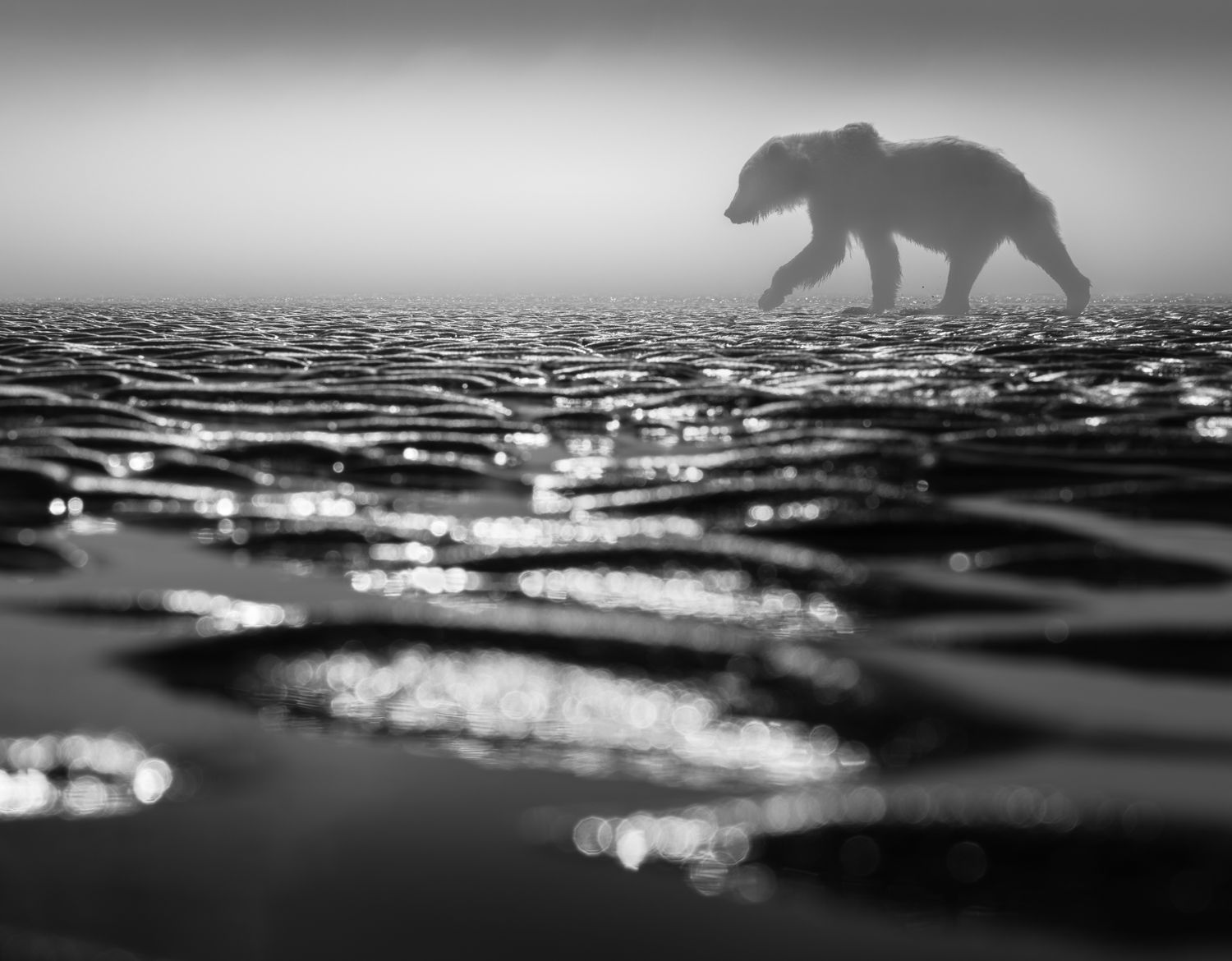
Because here is what else black and white shows: relief comes. The itch gets scratched. The storm passes. The tears turn to joy—maybe not immediately, maybe not as fast as we want, but they turn.
And when black and white shows that moment of relief, of light breaking through, of finally catching your breath—it is not performance. It is not pretending the hard parts did not happen. It is the whole story. The struggle AND the relief. The waiting AND the breakthrough. The looking up AND the moment when you realize: I made it. I am still here. God was here all along.
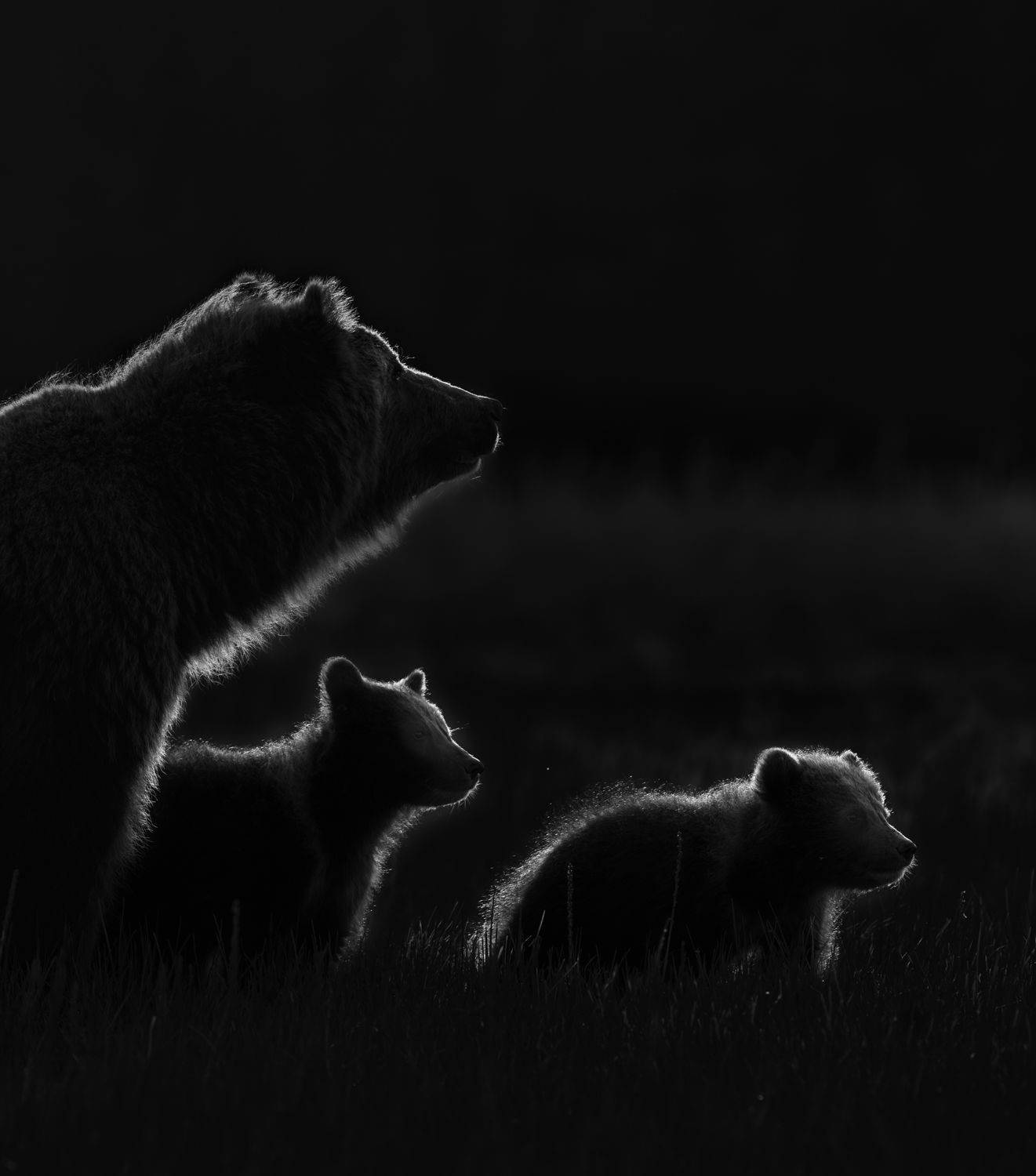
So here I am, someone who used to scroll past black and white photography because I thought it was "less than what it could be," now sitting with three international awards and a completely different understanding of what it means to see clearly.
I was dismissing genius because it came in a package I had decided was inferior. And I am wondering now: what else am I dismissing because it does not come wrapped the way I expect? What wisdom am I scrolling past because it looks too black and white, too simple, too clear-cut to contain real depth?
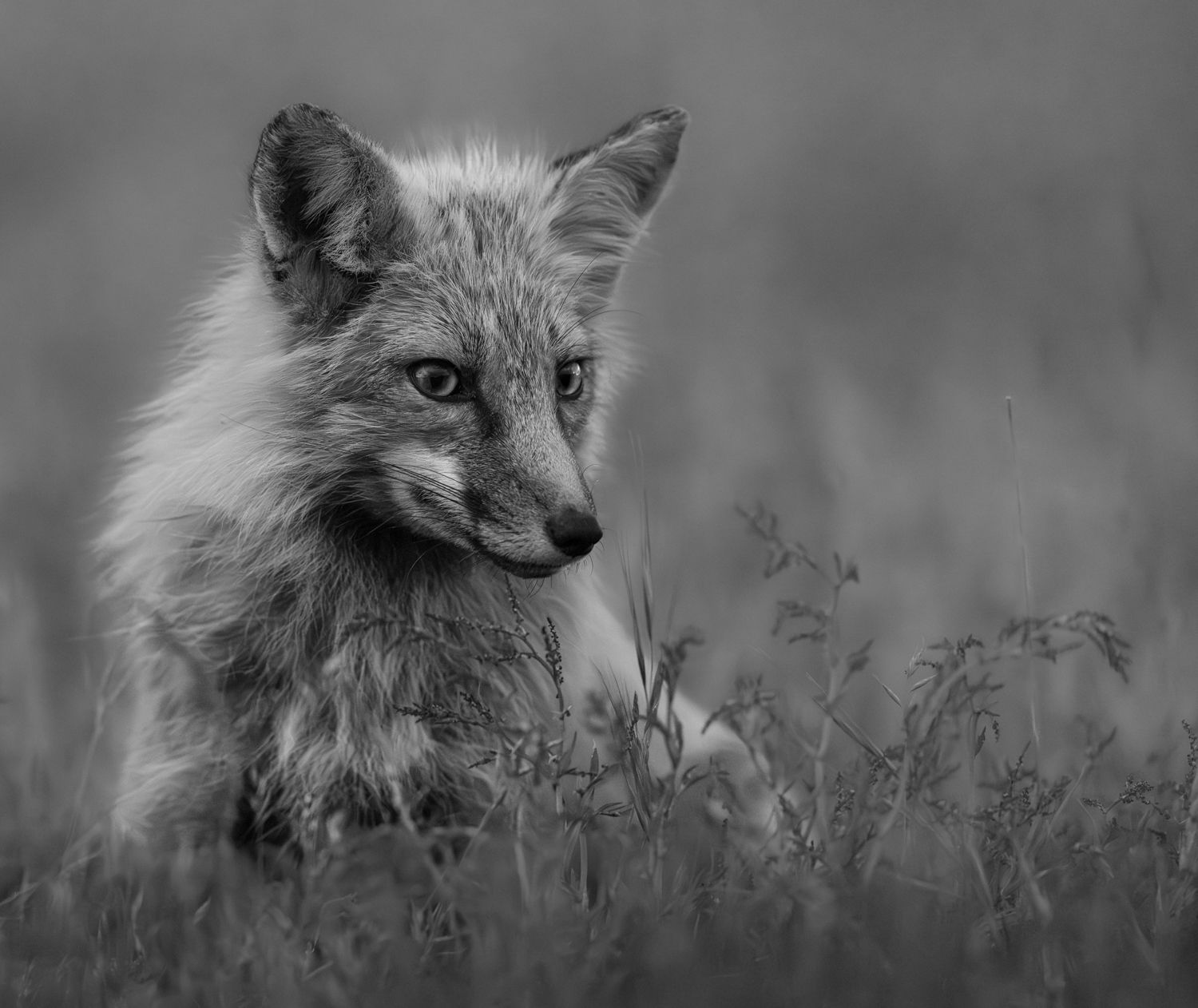
Black and white did not give me less. It gave me more. Way more. It stopped me from scrolling and made me actually look. At the sacrificial love happening in ordinary moments. At the scruffy, messy, beautiful reality of real life. At the hard parts I wanted to hide. At the hope that exists right alongside the struggle.
And I cannot help but wonder: What are we scrolling past in our own lives because we are moving too fast through the color? What love is costing someone something right in front of us, and we are missing it because we are not paying attention? What ordinary moments are we dismissing because they do not look exotic enough to matter? What hard parts are we hiding because we think God only wants the filtered version? What hope are we missing because we are so focused on the storm that we forget to look up?
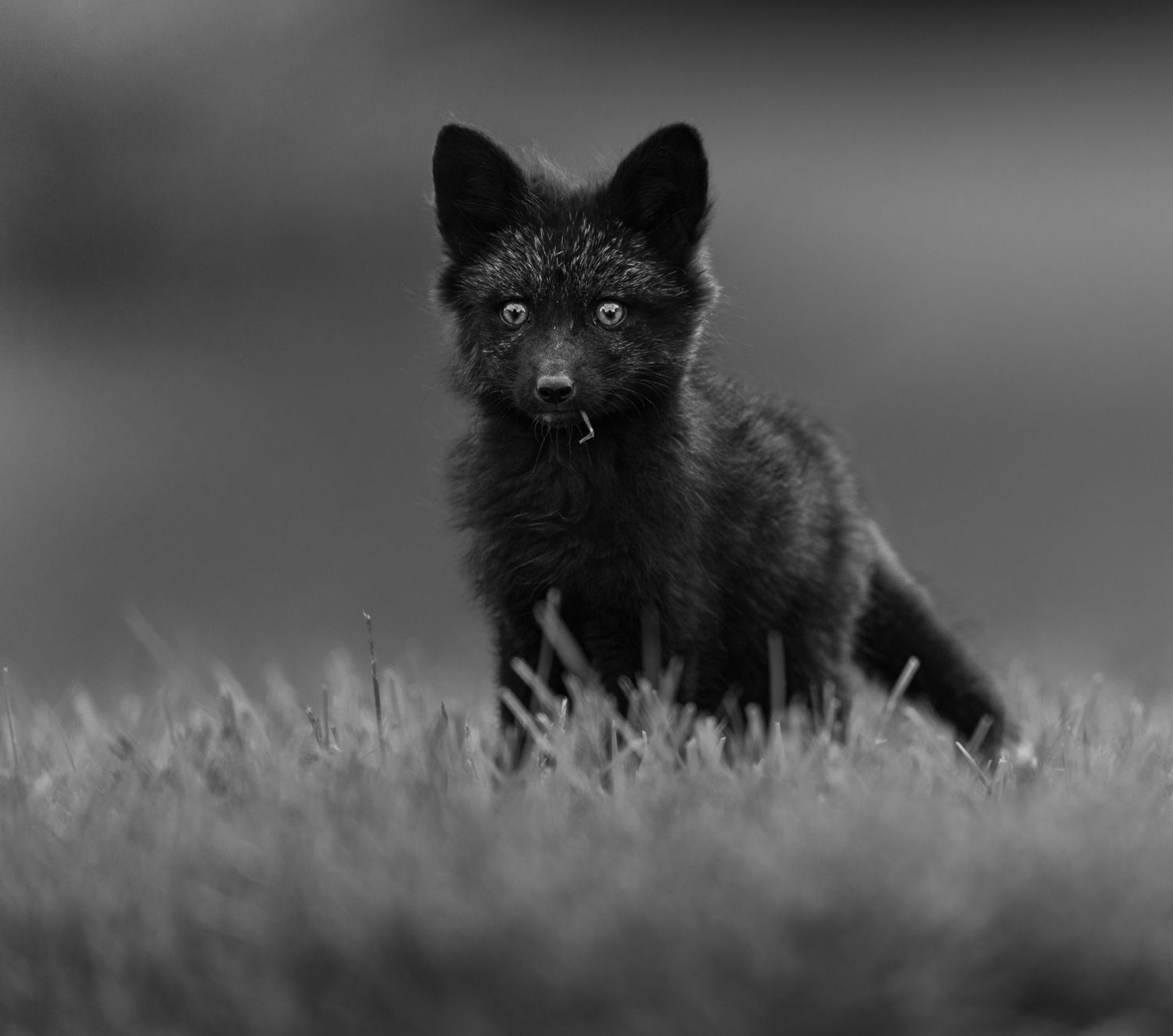
Maybe God's "black and white" truth is not the problem. Maybe our resistance to it is. Maybe His clear boundaries are not meant to restrict us but to help us actually see—to strip away the distractions and reveal what matters. The love. The struggle. The hope. The presence that never leaves.
"The law of the Lord is perfect, refreshing the soul" (Psalm 19:7).
Not restricting it. Refreshing it.
Because when we stop scrolling and actually look, when we let black and white show us the whole truth instead of just the pretty parts—that is when we see ourselves. That is when we see each other. That is when we see God. Right there in the nose grab and the scratched itch and the scruffy days and the storms and the shadows and the looking up. All of it. The whole story. Clear. Honest. True.
Black and white.
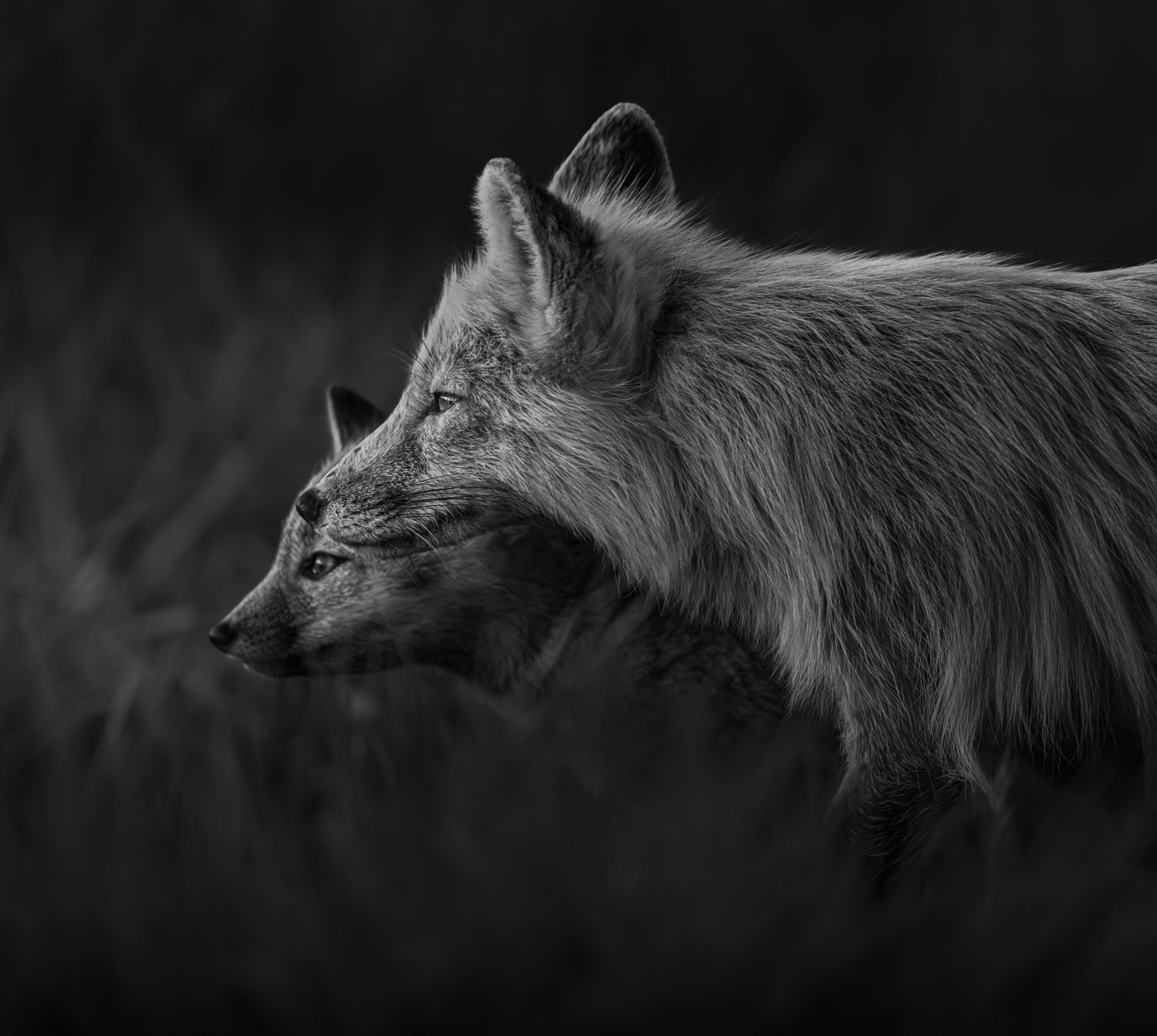
Maybe it is time to stop scrolling.